
Neurological conditions
Neurological conditions are common among older people in Bulgaria and worldwide. At Queen Eleonora's Hospice, we often care for people after a stroke and people with multiple sclerosis, Alzheimer’s disease or Parkinson’s disease.
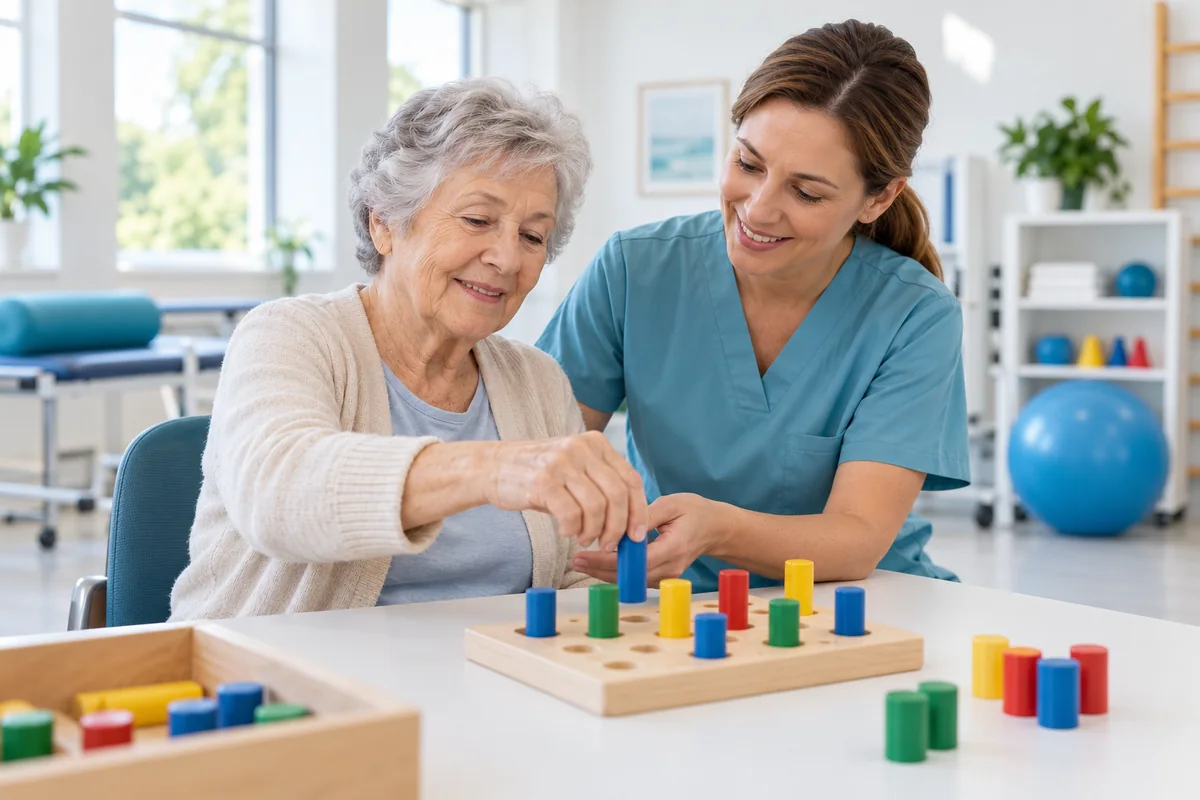
Recovery from a neurological condition is highly individual. Some people return almost fully to their previous life, others recover partially, and some need several years. In every case, care after discharge plays an important role in supporting recovery and a return to daily life.
- support with taking prescribed medication
- social interaction and speech practice
- activities involving reasoning, memory, attention and arithmetic
- support for psychological and emotional wellbeing
- individually planned rehabilitation to improve movement in affected limbs and support mobility
We encourage family and friends to be involved in recovery. Their presence and encouragement can help the patient feel supported and connected with family life. Visits from younger family members can be especially uplifting when appropriate for the patient.
Working together allows us to provide a more comprehensive approach and support the fullest recovery possible for each person.

Care after a stroke in the hospice
After hospital discharge, a person who has had a stroke may need monitoring, everyday help and movement support. We discuss the necessary care with relatives and whether it can be provided at the hospice.
A stroke can change movement, communication and independence. Nursing and daily care follow the treating team’s instructions, support needs and changes in condition. Eating follows individual advice, particularly when swallowing is difficult.
Rehabilitation is planned individually. The specialist assesses suitable movements and support for standing, transfers and walking. Recovery differs for everyone; no particular outcome or timescale is promised.
We attend to personal hygiene, comfort, safe movement and the patient’s participation in activities they can manage. Communication and family support are part of care and reflect the person’s abilities and wishes.
Talk to us first. We clarify needs, the condition after discharge and care options. The discharge summary and prescriptions are discussed through an agreed channel — do not attach them or describe diagnoses in the short online form.
- Contact us
Call us or send a short enquiry. Please do not send medical documents. - We’ll discuss your needs
The team clarifies the information needed, care options, bed availability and conditions. - Agree the next steps
Admission arrangements begin after the team confirms that suitable care can be provided.
Admission is confirmed after individual assessment and subject to bed availability.
When should we contact you after discharge?
You can call while discharge is being planned to discuss needs and admission options. A transfer is arranged after assessment.
Is rehabilitation the same for everyone?
No. The activities and exertion reflect the condition, treating team’s advice and individual assessment.
What if new stroke symptoms appear?
Call 112 for sudden facial drooping, arm weakness or difficulty speaking. The hospice form is not an emergency service.
Call us today
0888 607 000Request home medical services
Helpful advice
For neurological conditions
Follow the plan
Help with exercises and daily activities according to the individual recovery plan.
Allow time for communication
Speak calmly and allow time for a reply. Discuss speech difficulties with a specialist.
Prepare the home
Clear the walking route and ask the team which mobility aids are needed.
Ask about eating and drinking
If swallowing is difficult, follow the treating team’s specific instructions.
Share the care
Involve relatives and ask for help so you also have time to rest.
This is general advice and may not apply to your condition. Always follow the individual instructions of your treating team.
What our patients and their families say
Thank you to everyone at Queen Eleonora's Hospice for the care you gave my father. He arrived with a tracheostomy and a catheter and needed continence care. After five months of intensive care and rehabilitation, he is coming home walking independently and in good health. May God grant you and your families health and a long life. Your kindness and patience are priceless!
T.S.
DaughterThank you to all the staff at Queen Eleonora's Hospice, to Mariana Petrova and Dr Nikolov, for your care, attention, dedication and hard work. Thank you to nurses Dora Hristova and Ruseva, the caregivers and support staff who looked after my brother D.R. for eight months. I wish you happiness and success in your noble work!
M.K.
SisterI came to the hospice on 30 March 2009 after surgery on my right leg. The chief doctor, manager and entire team welcomed me kindly. I stayed for 90 days and was cared for with great warmth and attention. I love you all and wish you health and happiness. Thanks to your care and kindness, I can walk and look after myself again.
D.D.
PatientWhat does a person who is unwell need? Attention, a smile and a kind word. I want to thank every member of the hospice team for looking after me, but I am afraid of leaving someone out. I wish you wonderful people good health and continued dedication to your noble calling — helping those who are ill.
D.S.
PatientMy heartfelt thanks to the whole Queen Eleonora's Hospice team for caring for my mother. I am deeply impressed by your professionalism. Thank you to Ms Petrova and Dr Nikolov. I have the greatest respect for you.
E.E.
DaughterI have lived abroad for many years. My father had a stroke two years ago and uses a wheelchair. After my mother died, I brought him to Queen Eleonora's Hospice. I was very unsure, but now I know I made the right choice. The standard of care is high. I can speak to my father on Skype, which gives me peace of mind. Thank you for being there. I do not know what I would have done without you!
M.I.
DaughterWe sincerely thank Queen Eleonora's Hospice for its professional approach and care for T.I., for whom it was home during the last 24 months of his life. We wish you good health and continued growth and development.
D.M. and N.M.
Son and daughterAfter a serious illness, I came to the hospice and was welcomed warmly by Ms Petrova, who showed real concern for my health. I felt I was joining a caring family, and I was right. For six months I lived here in very good conditions and was treated with warmth and kindness. I was not alone at New Year, on Babinden or on 8 March. None of us was alone: we were together like a family, even though we were far from our own. Ms Petrova made that possible. My sincere thanks to the whole team for your attention, care and kindness. I wish you health and good fortune so that you can continue this noble work.
S.F.
PatientEvery question
deserves attention.
Contact us to discuss the care you or your loved one needs.
Call us · +359 888 607 000Admission and enquiries · Mariana Petrova, manager
0888 607 000
Consulting doctor · Dr Ivan Nikolov
0888 405 371
Varna, Medical Complex Mladost
bul. Republika · Entrance through the rear car park
Experience and trustHealthcare in Varna with attention to every patient. Understanding and support for their family.
Residential careRound-the-clock medical and daily care tailored to the patient’s condition. With attention to comfort and peace of mind.
Home medical visitsVisits by nurses and rehabilitation specialists in Varna and within 20 km of the city. Professional help in familiar surroundings.